Choosing a centre for a baby is a big decision, and most of the questions parents bring to us aren’t really about the building. They’re about what happens to their pēpi in those first days: who will hold them, whether they’ll sleep, and how long it will take before they’re okay. This post walks through what a first week can look like for pēpi aged roughly 6 to 18 months, and what it looks like here at Lilliput.
Settling takes as long as it takes
There is no standard settling timeline for a baby. Some pēpi take to a new place within a few days. Others need a couple of weeks of short visits before a full day feels manageable. Age plays a part too. Somewhere in the second half of the first year, many babies become wary of unfamiliar adults, so a pēpi who starts at six months may settle quite differently from one who starts at a year. Neither is a sign that anything is wrong.
What helps most is familiarity built up gradually: the same faces, the same sounds and smells, and a parent nearby while their baby works out that this is a safe place to be.
We encourage whānau to start visiting as often as you like at least about two weeks before the start date. There is no set number of visits and nothing to book.
Try a few different times of day, so a kai time and a moe time become familiar too, not just the one slot you happened to drop in on. These visits are also when you meet the Key Teacher for your pēpi, before the first full day.
Closer to the start date we will suggest leaving your pēpi with us for about an hour. That is the first real practice at the goodbye, and at you coming back.
It’s normal for a first week to be uneven. A good day can be followed by a teary one. Tears at goodbye don’t always mean a hard day afterwards, so ask the kaiako how the rest of the day actually went.
Sleep in a new place
Sleep is often the part of settling that parents worry about most, and with good reason. A new room, new sounds and a new person settling them can unsettle even a good sleeper. Shorter naps or a change in pattern over the first week or two is common, and it usually eases as the place becomes familiar.
The most useful thing you can bring is detail. How does your pēpi fall asleep at home, and roughly when? What helps when they wake? Good infant care follows a baby’s own rhythm rather than fitting them into a timetable, and the more the kaiako know, the closer they can get to what works at home.
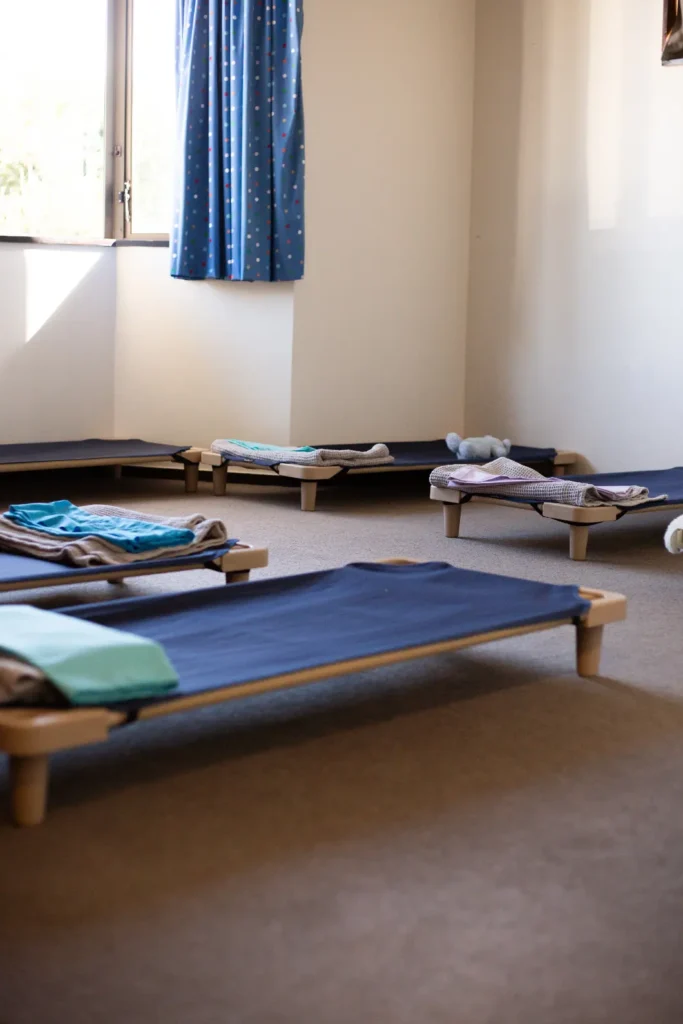
We have sleep rooms across the centre for different ages and sleeping patterns, with calm music playing quietly throughout. Your pēpi has their own cot or mattress, the same one every day, so there is a place that is theirs.
A kaiako who knows them well cuddles and snuggles them into bed the way you do at home, and stays in the room until they have drifted off. After that your pēpi is physically checked every five to ten minutes, every time they sleep.
Sleep times go into the Home app as they happen, so you can see when they went down and how long they slept without waiting until pick-up.
The key-teacher approach
Many centres caring for under-twos use a key-teacher approach, sometimes called primary caregiving. The idea is simple: one kaiako takes the lead in caring for your pēpi, especially in the close, personal moments like feeding, changing and settling to sleep. For a baby, that consistency matters. Te Whāriki, the early childhood curriculum in Aotearoa, puts relationships at the heart of learning for infants. A baby who knows who will come when they cry is free to get on with exploring.
A key teacher is a key person for you as well. It means one kaiako who comes to know the cues your pēpi sends well, and one person you can talk to about how the day went.
Who that person turns out to be is not decided on paper. Who has room in their group gives us a starting point, but it is only a guide. In the end your pēpi chooses who they form that bond with, and we do not force it. Over the settling visits it usually becomes obvious who it is, and we follow that.
Every pēpi also has a second Key Teacher. When the main one is away, those close moments are still done by someone who already knows them, rather than by whoever happens to be free.
What helps in the first week
- Keep goodbyes short and honest. Say goodbye, tell your pēpi you’ll be back, and go. Slipping away unseen can make the next goodbye harder.
- Ask what you can bring from home that feels familiar to your pēpi.
- Tell the kaiako about changes at home: a new tooth, a rough night, a new food. Small things shape a baby’s day.
- Expect some tiredness in the evenings. A whole new world is hard work for a small person.
Kaiako will catch you at drop-off and again at pick-up, and the end-of-day one is where you hear how it actually went, not just “fine”.
Through the day the Home app shows you sleep times, nappy changes, kai, and the notes kaiako make as they go. There are tablets around the centre, so a message asking whether your pēpi settled gets answered quickly, and you are always welcome to simply ring.
Beyond that, the first week runs the way you want it to. Some whānau want a call partway through the first morning. Some would rather have a message and a photo. Some would find a call more unsettling than reassuring and would rather wait until pick-up. Tell us which you are. It follows your family, not a script.
If anything happens, you hear it from us first: a bump or a scratch is written up in the Home app the same day, and for a head injury we phone you rather than wait.
Come and see for yourself
The best way to know whether a centre is right for your pēpi is to visit, ask your questions and watch how the kaiako are with the babies in their care. If you’re in or near Tauranga South and thinking about care for your pēpi, we’d be glad to show you around Lilliput.
To arrange a visit, send us an enquiry or call us on 07 577 0458.